
Machinery · CNC and machining
CNC machining for wood and panels
A CNC router changes how a shop is organized: cutting, drilling and machining come together in a single program-controlled station. For that investment to pay off, you need clarity on which parts will be machined, how designs reach the machine and what happens to the parts afterwards.
Find my solution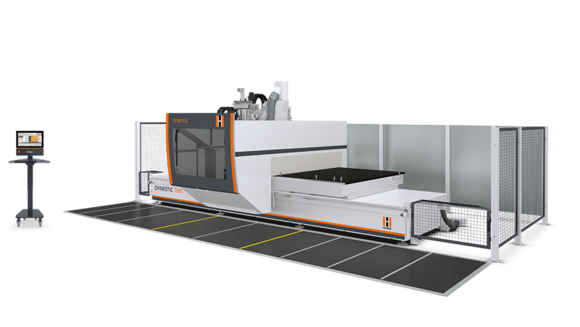
What a CNC solves in woodworking
Panel nesting
Full-sheet breakdown: cutting and drilling within one workflow, depending on configuration.
Furniture components
Hardware drilling, grooves and rabbets that repeat batch after batch.
Special parts
Contours, curves and shapes that would be slow or inaccurate with manual tools.
Made-to-order production
Switching jobs by loading a program instead of resetting several machines.
How we evaluate your CNC project
These five questions define the CNC type, its table size and the level of automation around it.
- 01
Materials
Particleboard, MDF, plywood, solid wood or others; thickness and whether panels arrive coated.
- 02
Dimensions
Largest sheet format you process and the smallest part that must be held safely.
- 03
Operations
Cutting, vertical or horizontal drilling, grooving, contour milling or rabbets, and which ones repeat most.
- 04
Files and software
How you design today (cabinet design software, CAD/CAM, drawings) and which file formats you can send to the machine.
- 05
Production flow
How sheets are loaded, how parts are removed and labeled, and where they go next: edgebanding, assembly or packing.
Criteria for choosing a woodworking CNC
- Table size and type
- Vacuum table for nesting or pod-and-rail for individual parts, depending on your job mix.
- Head and tooling
- Spindle power, number of available tools and drilling units according to your defined operations.
- Software and programming
- How your design connects to the machine, who will program it and how long it takes to prepare a new job.
- Loading and unloading
- Handling time can exceed machining time; automation is assessed by volume and available staff.
- Installation
- Space, foundation if required, power, air and extraction, plus training for the people who will operate and program it.
The Holz-Her DYNESTIC image is an illustrated reference of the equipment family. Model, size and configuration are defined after reviewing your process.
Woodworking CNC FAQ
Do I need a dedicated programmer?
It depends on how many new jobs you prepare and how you design today. We review your file workflow to estimate programming effort and the training required.
Nesting or a pod-and-rail machining center?
Nesting usually fits when most work comes from full sheets; pod-and-rail when individual parts or edge machining dominate. Many plants combine both flows.
Does a CNC replace the panel saw?
In some flows it takes over much of the cutting, but not always. We assess it based on your part mix and volume.
What happens to parts after the CNC?
For panel parts, edgebanding can be the next stage; assembly or finishing may follow instead. We review the sequence based on the parts you make.
Next step
Tell us what you want to machine.
Share your materials, parts and how you design today. We'll reply with a first recommendation for your CNC project.