Machinery · Edgebanding
Edgebanders for furniture and panel production
Choosing an edgebander doesn't start with a catalog. It starts with the parts that go through your shop every day: which panels you use, which edges you apply, how many meters you produce and what finish your customers expect. This guide explains how we review that process before proposing a machine.
Find my solution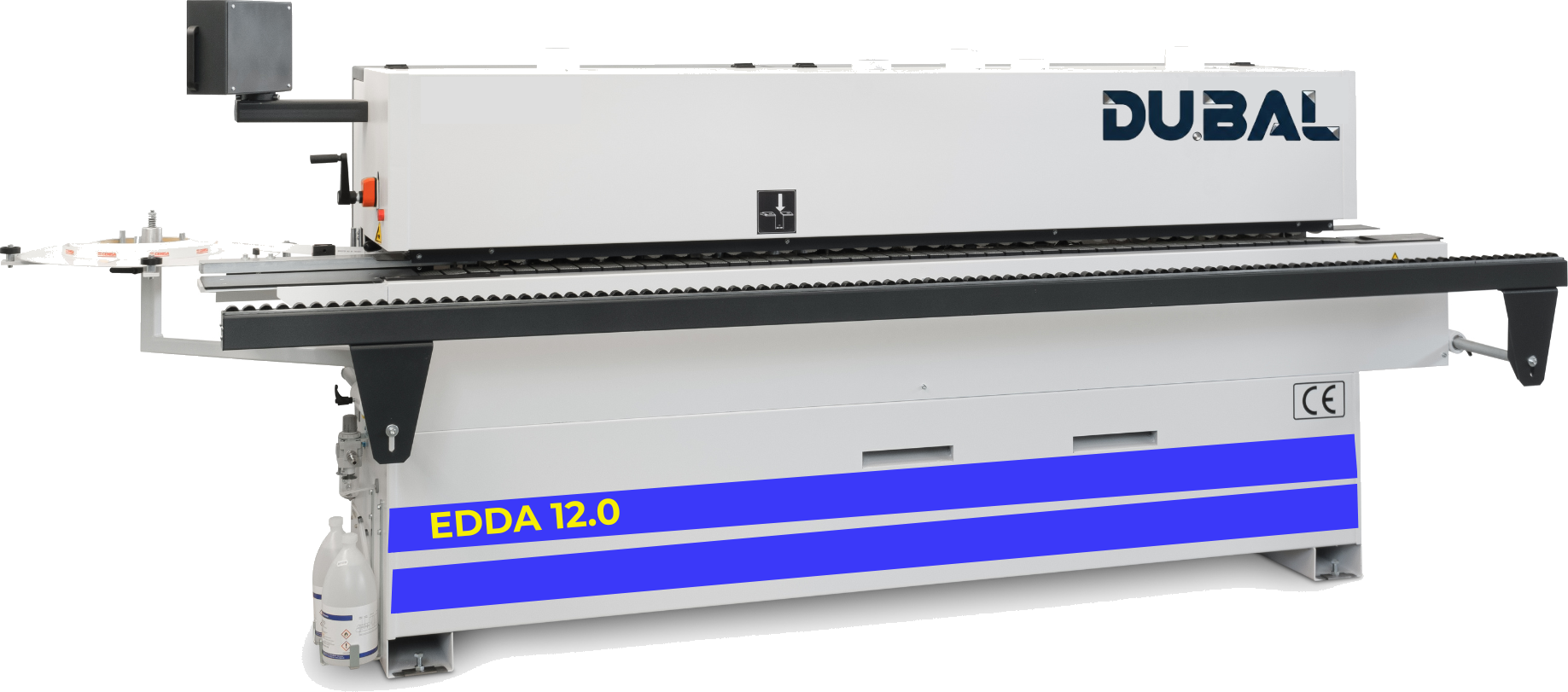
Where an edgebander fits
Kitchen and bath cabinets
Doors, sides and shelves in coated panel, where the visible edge shapes the perception of quality.
Office and retail furniture
Tops, partitions and repeated modules that need the same result across long batches.
Custom woodworking
Shops that switch colors, thicknesses and edge types several times a day and need fast changeovers.
Series production
Plants where the edgebander is part of a line and its pace sets the rhythm for the rest of the flow.
How we evaluate your edgebanding process
Before discussing models we look at five variables. Together they define the machine type and the level of automation that makes sense.
- 01
Parts
Minimum and maximum dimensions, panel thickness, and whether you run small, narrow or shaped parts.
- 02
Edges
Material (PVC, ABS, melamine, wood veneer or others), thickness, coil or strip format and how often you change.
- 03
Volume
Linear meters or parts per shift today and what you expect to produce in the coming years, including seasonal peaks.
- 04
Floor space
Available area, part return path, power, compressed air and dust extraction in the plant.
- 05
Finish
Expected joint quality, corner rounding, scraping and cleaning: what is fixed by hand today and shouldn't be.
Criteria for choosing an edgebander
- Working units
- Pre-milling, gluing, end trimming, flush trimming, scraping and buffing. Each unit adds quality and complexity; they're chosen by the finish you need.
- Gluing system
- The adhesive type and how it's applied affect the visible joint, machine cleanliness and color-change times.
- Feed speed
- Higher speed only pays off if the rest of the flow can feed the machine and take parts away at the same pace.
- Changeovers
- If you change edges or thickness often, ease of adjustment matters as much as speed.
- Operation and support
- Operator training, access to spare parts and technical support after start-up.
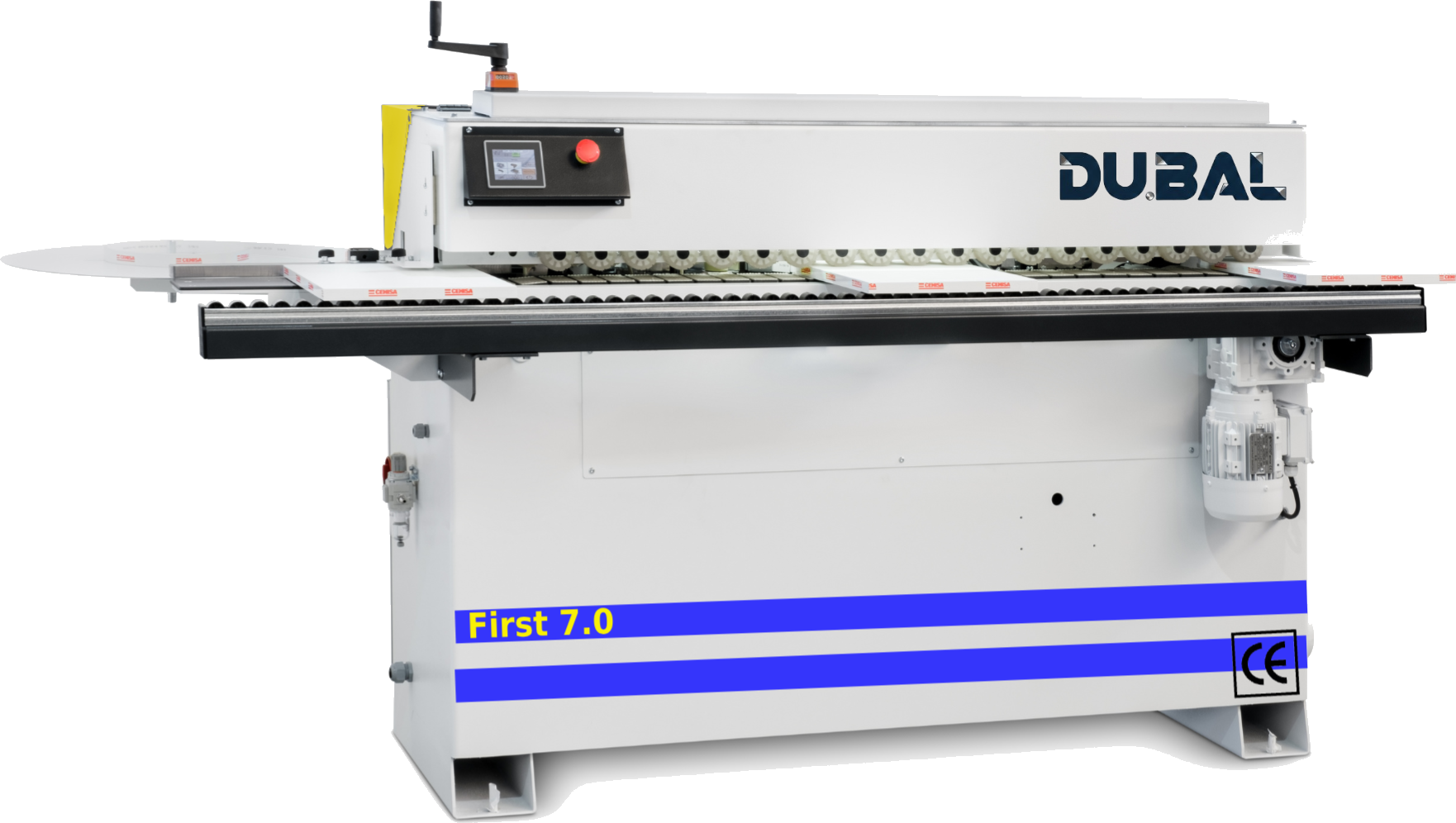
Dubal visual references
The images show two references from the Dubal line. The right configuration for your plant is defined after reviewing your process.
Edgebander FAQ
How do I know if I need a more automated edgebander?
When edgebanding is the bottleneck, when manual corner and joint rework takes hours, or when planned volume exceeds what your current machine can sustain with consistent quality.
Can I run different edge types on the same machine?
It depends on the working units and the gluing system. That's why we ask for the actual materials and thicknesses you use before recommending a configuration.
Does the adhesive affect the result?
Yes. The bond between edge and panel defines the visible joint and its durability. We review the adhesive together with the machine; compatibility is confirmed against the manufacturer's technical data sheet.
What happens after installation?
We'll review the start-up, training and support your project needs; the scope is confirmed in the proposal.
Next step
Tell us how you edgeband today.
Share your parts, edges and volume. We'll reply with a first recommendation for your process.